

 русский
 Español
The company relies on a high degree of brand awareness, fine product quality, convergence of multiple strong advertising media power, and through the integration of capital, knowledge, talent technology, channels, information operations.
A colander looks like a simple tool, yet small design choices show up every time someone uses it. A basket can have a nice finish and a handy shape, and still drain badly, feel awkward to lift, or wobble on the counter. Those problems are easier to catch before a product goes into a retail range than after customers start using it.
For wholesalers, importers, and retailers, choosing a Colander Strainer Basket means thinking about customer expectations, construction, and details that a catalog rarely shows. A design that sells well in one market may not suit another.
So instead of judging by looks alone, it helps to ask three things: how it's made, what it can handle, and where it fits in everyday food preparation.
What Do the Drainage Holes Tell You?
The perforated surface is the first thing to check. Hole size and placement decide which foods the colander can hold and how quickly water leaves the basket.
Compare two tasks. Draining cooked pasta needs room for water to escape while the food stays put. Rinsing small berries needs smaller openings so nothing slips through. A design that handles one task well may struggle with the other.
Layout matters too. Some baskets have holes only on the bottom, while others add them along the sides. Checking both areas shows how the product is meant to drain.
When you compare samples, look for:
- Hole sizes that suit the intended foods.
- Even placement across the basket.
- Smooth edges around each perforation.
- Spots where food particles could get stuck.
More holes don't automatically mean better draining. Basket shape, hole pattern, and intended use all play a part.
If you're building a general kitchenware range, decide early whether the product should cover several common tasks or one specific job.
How Do Stainless Steel and Coated Finishes Differ?
Material is usually one of the first things buyers compare, especially when several products are competing for one slot in a collection.
Stainless steel colanders have a familiar metal look. People use them to rinse vegetables, wash fruit, and drain pasta. Coated metal designs add options for buyers who want specific colors or a different surface appearance.
The material name alone doesn't say much, though.
Look Closely at the Finished Product
A photo can show a clean, shiny surface, but finishing quality is hard to judge from an image.
Check the rim, the inside of the basket, and the points where the handles meet the body. Rough edges, uneven surfaces, or patchy finishing can affect both appearance and handling.
Coated products need a closer look at the surface treatment. Ask the manufacturer about the coating process, recommended cleaning methods, and inspection procedures.
Confirm the material through supplier documents as well. Appearance can't tell you the metal grade or whether the product meets food-contact requirements in your target market.
When finish matters to your decision, a physical sample gives you more to work with than a catalog photo.
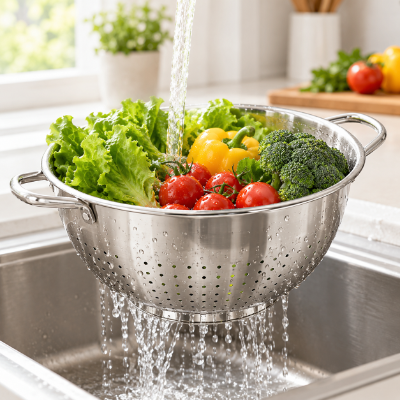
Does Shape and Depth Matter?
Kitchens differ. Some people mostly rinse vegetables. Others reach for a strainer to drain pasta or fruit several times a week.
Shape affects how easily food goes in, moves around, and comes out. A deeper basket holds more loose ingredients. A wider opening makes it easier to reach inside.
These differences look small on a product page. They become obvious in daily use.
Check the Base Before Choosing a Design
The base decides how the basket sits on a countertop, in a sink, or over another container. Some have a flat bottom, some have raised feet, and some are shaped to rest over a sink.
Think about where it will usually be used. If it stands on a work surface, check that it sits level. If it's meant to fit over another container, make sure the shape suits that purpose.
The rim needs the same attention. It should be finished cleanly, with no sharp spots or rough areas.
For wholesale buyers, these features help separate products that look alike in photos but work differently in the kitchen.
Why Do Handles Deserve a Second Look?
An empty colander is light. Fill it with wet vegetables or cooked pasta and lifting it becomes a different job.
Handle position and shape affect how comfortably the basket is carried. There should be enough room for a firm grip, and the layout should suit the basket's size.
Two side handles are common, but looks are only part of the picture. How securely they're attached matters just as much.
Inspect the connection points for gaps, uneven joints, rough edges, or misaligned parts. With a sample in hand, lift it the way a cook would. Adding a representative load can reveal problems an empty basket hides.
Assess the product against its intended use and the relevant testing requirements. For colanders used with hot food, handling instructions are important because metal parts can get hot.
Is Cleaning Part of the Design?
The job isn't done once the water drains. The colander still has to be washed, dried, and stored.
Small food particles tend to collect around the holes, especially after straining soft ingredients that break apart. The rim and handle joints may need extra attention while washing.
When you examine a sample, check whether those areas are easy to reach. Tight gaps and hidden corners mean more effort at the sink.
The finish plays a role here. Different materials and surface treatments call for different care, so confirm the manufacturer's cleaning instructions instead of assuming one method suits every product.
Storage Can Influence the Choice
Storage is another practical point, particularly when several colanders are sold together.
Some designs nest inside one another and tuck neatly into a cupboard. Others have handles or shapes that take up more space.
That matters to household customers and to businesses selling kitchenware sets. For distributors, shape can also affect packaging and how items are grouped for shipping.
If you're comparing several styles for one collection, put them side by side. Differences that are easy to miss one at a time often stand out together.
What Should Buyers Check During Sample Inspection?
Product images help narrow the list. A sample shows construction and handling.
The process doesn't need to be complicated. Start with the features that affect ordinary use and the areas where manufacturing differences are easy to spot.
| Inspection Area | Details to Review |
|---|---|
| Drainage openings | Hole placement, consistency, and suitability for intended foods. |
| Rim | Edge finishing and visible surface defects. |
| Base | How evenly the basket rests on its intended surface. |
| Handles | Grip space, alignment, and attachment quality. |
| Interior | Areas that may collect food residue. |
| Surface finish | Consistency and applicable care instructions. |
| Storage | How well it fits with other items in the planned range. |
Tailor the inspection to the intended application. A general-purpose household colander calls for a different assessment than one designed for a specific food preparation task.
You can also ask the manufacturer which quality checks are carried out during production and what supporting documents are available.
Which Questions Should You Ask Kitchenware Suppliers?
For a wholesaler or importer, approving one sample is only part of the process. The supplier should also be able to explain materials, manufacturing arrangements, inspection steps, and packaging options.
These answers matter more when products are reordered or sold under a private label.
Before placing an order, consider asking:
- What materials are used for the basket and the handles?
- How are edges and connection points finished?
- What inspection procedures run during production?
- How is the approved sample used as a reference for repeat orders?
- What care instructions should be passed on to customers?
- Which packaging options are available?
- What material and food-contact documents can be supplied for the destination market?
The replies show what you're actually buying and make supplier comparisons simpler.
Planning a Private-Label Kitchenware Range
Some businesses want to adjust a colander's finish, shape, handle design, or packaging to match their own line. Depending on the manufacturer's capabilities, this can be handled as an OEM or ODM project.
Learn what options exist before you lock in a design. Also clarify sample approval, production arrangements, inspection expectations, and packaging requirements.
Clear communication at this stage lets both sides agree on the product before the order goes into production.
How Do You Choose a Colander for the Right Market?
What matters most depends partly on where the product will be sold.
A retailer building a coordinated collection may focus on color, finish, and how the colander looks next to other items. A wholesaler supplying everyday kitchen tools may care more about practical use, cleaning, and consistent construction.
If you supply different customer groups, a few designs may serve you better than one basket meant to fit every situation.
Before choosing, think through the intended users, the foods the product will handle, the available storage space, and the presentation needs of your sales channel. Confirm material documents and applicable food-contact requirements for the destination market as well.
Together, t hese points give you a clearer basis for deciding what belongs in your range.
Picking a colander takes more than comparing shapes and finishes. The drainage openings should suit the intended foods, the handles should be well constructed, and the basket should be practical to clean and store.
For wholesalers, importers, and retailers, these details also make good starting points for conversations with manufacturers. A sample inspection, clear product information, and a solid grasp of your target market support decisions that go beyond looks.
A photo may be what first catches the eye. Construction and everyday usability deserve equal weight before an order is placed.