

 русский
 Español
The company relies on a high degree of brand awareness, fine product quality, convergence of multiple strong advertising media power, and through the integration of capital, knowledge, talent technology, channels, information operations.
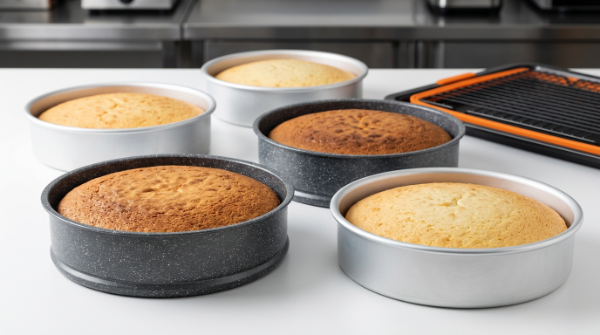
Have you ever baked the same cake recipe in two different pans and noticed that the color was not quite the same? The center may look similar, while the edges become darker or the bottom develops more color. The difference may not come from the recipe alone. Round Baking Trays are part of the baking process, and their material, surface, color, construction, and contact with the batter can all affect how heat reaches the food.
A recipe usually tells you what ingredients to use and how long to bake them. It does not always explain what happens between the batter and the pan. Yet that relationship matters. The tray sits directly between the oven environment and part of the cake, so the way it responds to heat can influence browning, texture, and the appearance of the finished product.
This is useful to understand whether you are baking at home, developing products for a bakery, sourcing bakeware for retail, or comparing different designs as a kitchenware buyer. Instead of asking which pan is simply better, it makes more sense to ask how a particular pan works with the recipe and baking application.
Browning Starts With the Way Heat Moves
Cake browning is closely connected with heat. As the batter warms, the outside and inside do not heat at exactly the same rate. The part touching the pan receives heat through direct contact, while the center is surrounded by batter and warms through a different combination of heat transfer.
That is why changing the pan can sometimes change the appearance of a familiar recipe. The oven may be the same, the ingredients may be the same, and the baking process may look unchanged, but the surface touching the batter has changed.
Why Do the Edges Often Brown First?
The outer section of a cake is in direct contact with the sidewall and base of the tray. Heat can therefore reach this area through the pan as the baking process continues. The center has a larger amount of batter around it and usually takes longer to develop the same level of heat.
This can lead to a familiar pattern: darker edges, a lighter center, or a firmer outer section. The effect is not necessarily a sign that the recipe has gone wrong. It can simply reflect the way heat is moving through the particular baking setup.
- The edge may develop color before the center.
- The bottom can brown differently from the top.
- The outer section may become firmer as the center continues to set.
- Changing the tray can change the appearance of the same recipe.
Does the Material of the Tray Matter?
It does. Different materials have different thermal characteristics, so they do not all respond to oven heat in exactly the same way.
Metal bakeware is widely used for cakes and other baked foods because it can transfer heat from the oven environment to the food. But the material itself is only one part of the picture. The thickness, surface treatment, shape, and overall construction can change how that material behaves in a finished tray.
| Tray Factor | What to Consider | Why It Matters |
|---|---|---|
| Material | Metal type and construction | Influences heat response and handling. |
| Surface | Finish or coating | Can affect food release, cleaning, and surface interaction. |
| Color | Light or dark appearance | May influence how radiant heat interacts with the pan. |
| Thickness | Overall construction | Can affect how the tray responds to heat. |
| Wall Design | Height and shape of the sidewalls | Influences the area where the batter contacts the pan. |
| Base | Flatness and construction | Supports stable contact during baking. |
| Rim | Edge structure and reinforcement | Can make handling and storage easier. |
Does Pan Color Really Matter?
Pan color is another detail that can influence baking behavior. A darker surface can absorb radiant heat differently from a lighter surface. This may affect how quickly the areas close to the pan develop color.
That does not mean a dark pan will always produce a darker cake. Baking involves several variables at once, including the oven, recipe, batter quantity, pan material, surface treatment, placement, and baking time.
Still, when comparing two otherwise similar trays, color can be one factor worth considering. For recipes where appearance matters, even a relatively small difference in browning can become noticeable.
Light-Colored Surfaces
Lighter surfaces are commonly used for cake bakeware where gradual browning is desired. They can provide a different heat interaction from darker finishes, particularly around the sides and bottom of a cake.
Dark-Colored Surfaces
Darker surfaces can absorb more radiant energy, which may contribute to stronger browning around areas that are close to the pan. This can be useful for certain baked products, but the desired result depends on the recipe and application.
Pan color should not be considered by itself. Material, surface treatment, construction, oven conditions, and recipe characteristics all work together during baking.
Why Can Two Similar Round Trays Bake Differently?
Two trays can have the same basic round shape while still behaving differently in the oven. Small differences in construction can change the way heat reaches the batter.
The material may be different. One surface may be coated while another is untreated. The tray walls may have a different structure. The base may have a different construction. Even the way the rim is formed can affect how the product is handled and stored.
This is why product evaluation should look beyond the basic shape. A round pan is not defined only by its outline. The details of the finished product matter when it is being used repeatedly.
How Does the Sidewall Affect Browning?
The sidewall has direct contact with the outer portion of the batter. During baking, this area can develop differently from the center because heat reaches it through the pan.
Wall height, angle, surface condition, and construction can therefore influence the relationship between the cake edge and the rest of the product.
For manufacturers, this makes sidewall design an important part of product development. The goal is not simply to create a circular container. The design needs to make sense for the intended food application and handling process.
Could the Oven Be the Real Reason?
Sometimes the pan gets the blame when the oven is actually contributing to the difference.
Heat distribution can vary within an oven. The position of the tray, airflow, heating elements, and cooking mode can all influence how a cake develops.
If you want to compare two trays, it is useful to keep the baking conditions as consistent as possible. Use the same recipe, prepare the batter in the same way, keep the trays in comparable positions, and change one factor at a time.
A Simple Way to Compare Two Trays
- Prepare the same recipe and batter.
- Use similar filling levels in both trays.
- Keep the oven setting consistent.
- Place the trays in comparable positions.
- Observe the edge, bottom, and center separately.
- Allow the cakes to cool before making a final comparison.
What About Pan Thickness?
Thickness is another part of the design that deserves attention. A lighter construction may respond to oven heat differently from a heavier one. The difference can affect how quickly the tray changes temperature and how it interacts with the batter.
This does not mean that one thickness is suitable for every baking situation. The right construction depends on how the tray will be used, how often it will be handled, and what type of food it is intended to support.
For a product manufacturer, thickness is therefore a design consideration rather than a simple marketing point. It needs to work together with the material, forming process, surface treatment, and intended application.
Why Does Consistency Matter to Commercial Buyers?
A small difference in browning may not matter much when someone is baking a cake at home once in a while. It can become more noticeable when a bakery produces similar products repeatedly.
Commercial buyers often need bakeware that can fit into an established workflow. Handling, cleaning, storage, stacking, product variation, and production consistency can all become part of the purchasing decision.
Questions Buyers Can Ask a Bakeware Manufacturer
- What material is used for the tray?
- How is the surface finished?
- What applications is the design intended for?
- Are different sizes or shapes available?
- How should the product be cleaned and maintained?
- Can the trays be stacked for storage?
- Is the design available for OEM or ODM projects?
- What packaging options are available for wholesale orders?
- Can the product design be adjusted for a specific application?
Can One Round Baking Tray Be Used for More Than Cake?
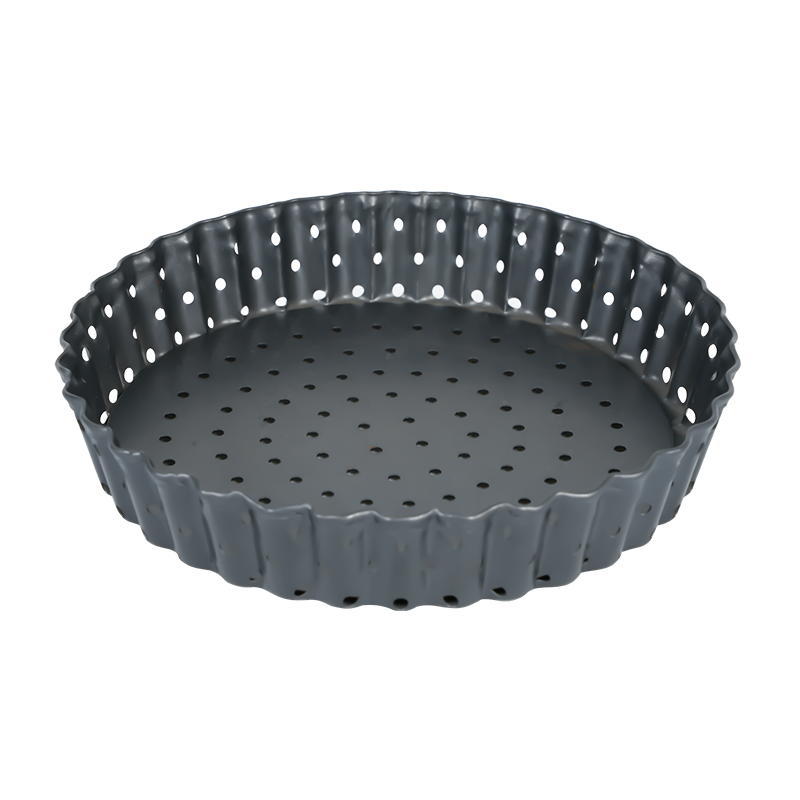
A round tray is not limited to one type of recipe. Depending on its construction and intended use, round bakeware can be used for cakes, pies, tarts, quiches, pizza-style products, and other baked foods.
The important point is to match the tray with the food being prepared. A shallow design may suit one application, while a deeper structure may be more practical for another.
This is also why kitchenware buyers often look for product ranges rather than a single format. Different recipes and customers can require different combinations of size, depth, material, surface, and design.
What Should Buyers Look At Beyond Appearance?
A baking tray may look simple when it is displayed in a catalog, but practical use involves several details that are not obvious from a product photo.
| Buying Consideration | Practical Question |
|---|---|
| Material | Does it suit the intended baking application? |
| Surface | Is the finish appropriate for food release and cleaning? |
| Construction | Does the tray feel suitable for regular handling? |
| Size Range | Can the product line cover different customer needs? |
| Storage | Can the trays be stored efficiently? |
| Customization | Can the design support an OEM or ODM project? |
| Packaging | Is the product suitable for the intended sales channel? |
Why the Same Recipe Can Look Different in Another Pan
Baking is a combination of ingredients, heat, time, equipment, and technique. The pan is only one part of that system, but it is a part that directly touches the food.
When you change the tray, you may also be changing the way heat reaches the batter. Material, color, thickness, surface treatment, sidewall construction, and base design can all play a role. The oven and recipe then add their own variables.
That is why it is possible to follow the same recipe and still see a different result after changing the bakeware.
Frequently Asked Questions
Why do some round baking trays brown cakes differently?
Different materials, colors, thicknesses, surfaces, and constructions can change how heat reaches the batter. Oven position and recipe conditions can also contribute to the final color.
Does a dark baking tray always make a cake darker?
No. Pan color is only one factor. Material, construction, recipe, oven conditions, and baking time can all influence the result.
Does the material of a round baking tray matter?
Yes. Different materials respond to heat differently, and their behavior also depends on construction, thickness, and surface treatment.
Can changing the baking tray change the baking process?
It can. A different tray may change how heat reaches the batter, which can affect browning and texture. Bakers may need to observe the result when switching between different designs.
Are round baking trays suitable for foods other than cakes?
Depending on the design, round bakeware can be used for cakes, pies, tarts, quiches, pizza-style products, and other baked foods.
What should wholesale buyers ask a baking tray manufacturer?
Buyers can ask about material, surface treatment, construction, available sizes, cleaning, storage, packaging, customization, and the intended application of the product.
Understanding the Tray Can Help Explain the Result
When a cake comes out darker around the edges in one pan and lighter in another, there may be more going on than a simple difference in baking time. The tray forms part of the heat transfer process, and its design can influence how the batter develops.
Material, color, thickness, surface finish, sidewall structure, and base construction all deserve attention. At the same time, oven conditions and recipe preparation should not be overlooked.
For bakers, understanding these factors can make it easier to troubleshoot unexpected browning. For kitchenware buyers, it provides a practical way to compare products. For manufacturers, it shows why thoughtful product design needs to begin with the intended application.
A round baking tray may look like a straightforward kitchen tool, but the details behind its construction can influence how it performs in everyday baking. Looking beyond the shape can help buyers choose bakeware based on real usage rather than appearance alone.