

 русский
 Español
The company relies on a high degree of brand awareness, fine product quality, convergence of multiple strong advertising media power, and through the integration of capital, knowledge, talent technology, channels, information operations.
The baking industry rarely stands still. Small shifts in consumer habits often ripple through supply chains, shaping how tools are designed and used. Among these tools, cake pans may seem simple at a glance. Yet behind them sits a manufacturing sector that is quietly adjusting to new expectations.
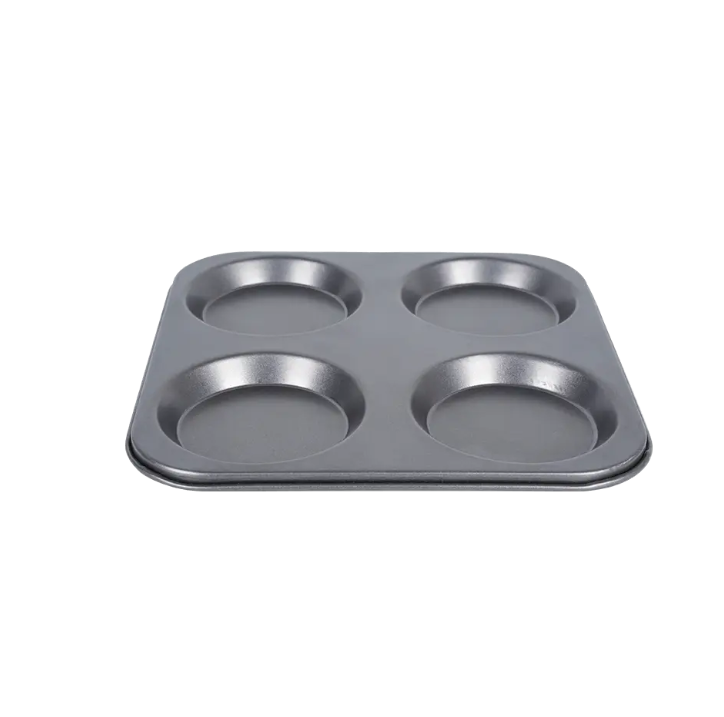
Cake Pan Factory is no longer only focused on producing uniform shapes in large quantities. Their role has begun to stretch into design support, production flexibility, and closer alignment with how baking businesses actually operate. These changes are not always dramatic. They often appear in subtle shifts in design thinking, workflow adaptation, and communication between manufacturers and buyers.
Why is the baking industry becoming more design-driven?
Walk into any bakery today and the display tells a story. Cakes are no longer just about taste. Shape, layering, and visual presentation have become part of the product itself.
This change has influenced how cake pans are requested. Bakeries now look for tools that help them create distinct results rather than standard forms. A round pan still has its place, but it no longer defines the entire category.
Factories are noticing this shift. Requests are less about "how many units" and more about "what kind of result." This has led to more conversations around shape variation, edge detail, and structural balance.
In response, production lines are becoming more flexible. Instead of running only long batches of identical items, factories are adjusting to smaller runs with varied designs. This reflects a broader move in the baking industry toward differentiation.
How are consumer habits shaping cake pan production?
What ordinary buyers want out of baking products heavily steers factory design choices these days. The way people shop and eat baked treats alters what commercial bakeries order, and this demand trickles down to the factories that make Cake Pan Wholesale .
A few clear trends stand out right now:
- Shoppers want individual, smaller cake servings
- They reach for desserts with unique, eye-catching shapes
- More people bake from scratch at home as a hobby
- Buyers seek bakeware that's simple to use and stow away
None of these trends talk about cake pans outright, but they still drive updates to the pans on the market. Mini cakes, for example, need matching molds that hold their shape well without collapsing the finished cake.
Manufacturers keep up by rolling out far more pan styles than they used to. They also weigh usability for both bakery staff and casual home bakers. Lots of minor details that were ignored before are now front of mind during product development.
What role does flexibility play in modern cake pan factories?
Flexibility is becoming a central theme. It shows up in both production and communication.
In the past, factories often focused on large, repeated orders. Today, many buyers request smaller batches with specific design features. This shift requires factories to adjust how they plan production cycles.
Flexible manufacturing does not mean constant change. It means being able to handle variation without slowing down the overall process.
Some ways this flexibility appears include:
- Adjusting production schedules to handle mixed orders
- Allowing minor design changes without full redesign
- Offering options that can be adapted rather than built from scratch
This approach helps factories stay connected to changing market needs without overcomplicating operations.
How are materials and surface expectations evolving?
Material choices are being viewed differently than before. Instead of focusing only on durability, buyers are also paying attention to how a pan interacts with batter, heat, and cleaning routines.
Surface feel and release behavior have become part of the discussion. Bakers often want tools that support consistent results without requiring extra handling steps.
Factories are responding by refining surface treatments and exploring variations that improve ease of use. These changes are often subtle. They do not always change the overall appearance, but they affect how the pan performs during daily use.
This shift reflects a broader trend in the baking industry: tools are expected to support efficiency without drawing attention to themselves.
How is customization changing factory-buyer relationships?
Customised products aren't just for big enterprise clients anymore. Even smaller shops and operators are asking for slight tweaks to match their own needs.
This shift has totally altered how manufacturers and their customers talk through projects. Instead of starting by flipping through product catalogues, discussions now kick off with real-world usage scenarios.
Buyers no longer simply pick ready-made items off a list. They explain the results they need to get out of the equipment, and the factory works out simple modifications to hit those targets.
This way of working builds far more of a team dynamic between both parties. It also demands open, thorough communication on every side. Any confusion early on will show up in the finished goods, so every little detail needs to be confirmed clearly.
Not all custom work calls for complicated overhauls. Most adjustments are minor tweaks built to make the product work better for a buyer's unique workflow.
What differences can be seen between traditional and current factory approaches?
The contrast between older production models and current practices can be seen in several areas:
| Aspect | Traditional Approach | Current Direction |
|---|---|---|
| Production focus | Large volume, uniform output | Mixed volume with varied designs |
| Design process | Fixed templates | Adjustable and responsive |
| Buyer interaction | Product-based selection | Use-case-based discussion |
| Product range | Limited variation | Expanded shape and function options |
| Manufacturing rhythm | Long, consistent cycles | More dynamic scheduling |
| End-user consideration | Indirect | More visible in planning |
This shift does not replace traditional methods entirely. Instead, it adds another layer to how factories operate.
How does the rise of small baking businesses influence factories?
Small independent baking shops have grown more common lately. Most run out of tight spaces and craft their own exclusive baked goods, so their demands don't line up with big industrial production lines.
These small operators tend to look for four key things:
- Molds that help their treats stand out visually
- Low minimum order sizes for trial runs
- Custom styles that fit their brand's look
- Light, easy-to-use tools built for tiny kitchen layouts
Manufacturers have had to rethink their whole product lineup to keep up. Instead of only catering to bulk wholesale clients, they've adjusted production workflows to handle small orders without slowing down mass runs.
Suppliers also pay much closer attention to packaging, storage and shipping solutions to suit these small shop owners.
Why is ease of use gaining more attention?
Ease of use may sound simple, yet it affects many aspects of baking.
A pan that is difficult to handle can slow down production. It can also increase the risk of inconsistent results. For home users, it may discourage repeated use.
Factories are starting to look at how their products are used in real environments. This includes:
- How easily a pan can be filled
- How it behaves during baking
- How simple it is to release the finished cake
- How convenient it is to clean and store
These considerations influence design choices, even if they are not immediately visible.
Ease of use connects directly to user experience. As expectations rise, small improvements in this area become more valuable.
How are visual trends influencing cake pan design?
Visual trends in baking are constantly changing. Social sharing has made presentation more important than ever.
Cakes are often photographed and shared before they are eaten. This has increased interest in unique shapes and patterns.
Factories are adapting by offering more variation in form. This does not always mean complex shapes. Even slight adjustments in edge design or depth can create a different visual effect.
At the same time, there is a balance to maintain. Designs must still support practical baking. A visually appealing pan that is difficult to use will not last in real applications.
This balance between form and function is becoming a key focus area.
What challenges do cake pan factories face during this transition?
Adapting to change brings challenges. Some of these are practical, while others relate to communication and planning.
Common challenges include:
- Managing smaller, varied orders without slowing production
- Interpreting custom requests accurately
- Maintaining consistency across different designs
- Balancing flexibility with production efficiency
Factories must also decide how far to extend customization. Too much variation can create complexity that affects workflow.
Finding a balance between adaptability and stability is an ongoing process.
How is digital communication influencing factory operations?
Digital tools have changed how factories and buyers interact. Communication is faster, but it also requires clarity.
Design ideas can now be shared visually before production begins. This reduces misunderstandings but also raises expectations for accuracy.
Factories are adapting by improving how they present options and respond to feedback. Clear documentation and visual references are becoming part of daily operations.
This shift supports more precise collaboration, especially when working with clients in different locations.
What does the shift toward practicality reveal about the industry?
Despite all the changes, one theme remains consistent: practicality.
Bakers still need tools that work reliably. Factories still need processes that run smoothly. The difference lies in how these goals are achieved.
Instead of relying only on standard solutions, the industry is exploring ways to adapt without losing efficiency.
This balance between change and stability defines much of what is happening in cake pan manufacturing today.
FAQ
Why are cake pan factories changing their production approach?
Because baking businesses are asking for more varied designs and flexible order options.
Do small bakeries influence manufacturing trends?
Yes, their need for unique and adaptable tools has become more visible.
Is customization becoming common in cake pan production?
It is becoming more accessible, even for smaller-scale buyers.
Are traditional cake pans still used?
Yes, they remain relevant in stable and repeated baking environments.
What is the main focus of modern cake pan factories?
Aligning product design with real usage conditions and evolving baking styles.