

 русский
 Español
The company relies on a high degree of brand awareness, fine product quality, convergence of multiple strong advertising media power, and through the integration of capital, knowledge, talent technology, channels, information operations.
Non-stick performance sounds simple on the surface. Food should release easily, and the pan should stay clean. But in real production, it is not a single-layer problem. A cake pan manufacturer deals with a chain of small decisions that all influence how the surface behaves during baking.
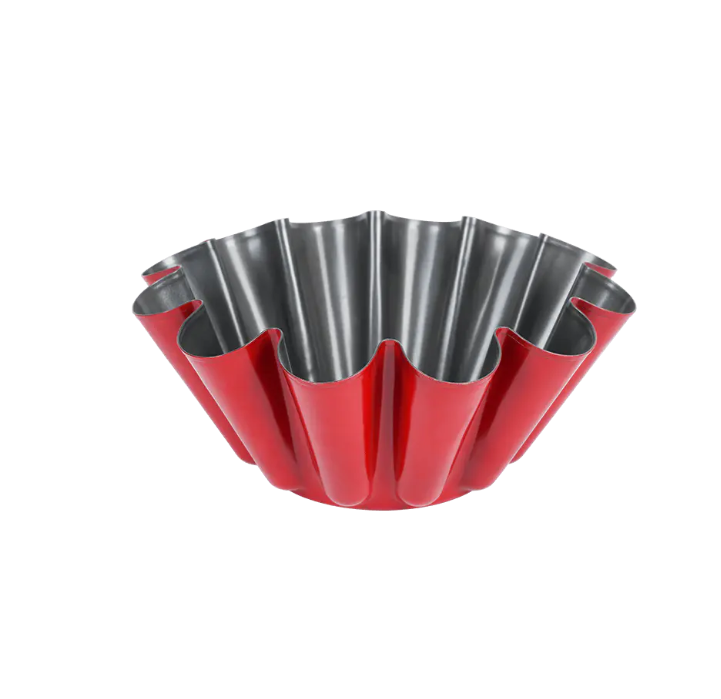
What looks like a smooth coating is actually the result of material behavior, processing control, and long-term usage response. Each part leaves a trace on final performance.
What actually defines non-stick performance in real use?
Non-stick is often judged at the moment food comes out of the pan. That moment is important, but it does not explain everything.
In real use, performance is shaped over time. A new pan may work smoothly at first. After repeated heating, cleaning, and cooling, the surface starts to change. Sometimes the change is slow. Sometimes it becomes noticeable quickly.
Manufacturers usually look beyond the surface layer. They pay attention to how the whole structure reacts under daily use conditions.
Key points that influence performance:
- Surface smoothness under repeated heating
- Stability of the base material
- Interaction between coating and structure
- Small changes caused by cleaning methods
- Evenness across different production batches
Non-stick behavior is not fixed. It evolves with use.
Why does material choice quietly shape everything?
Material is often the starting point, even before surface treatment. It decides how stable the pan remains when heat enters and leaves the structure again and again.
Some materials keep their shape and surface condition more steadily. Others may shift slightly under repeated temperature changes. These shifts are small, but they affect how food interacts with the surface.
A Cake Pan Factory usually evaluates material behavior in a practical way:
| Material behavior | What it affects in daily use |
|---|---|
| Stability under heat | Whether surface stays consistent |
| Structural balance | How evenly food releases |
| Wear response | How fast surface changes over time |
| Surface interaction | Smoothness during baking |
Material choice is less about strength alone. It is more about how the material behaves across time and repetition.
How does surface preparation change final results?
Before any coating is applied, the surface already carries its own condition. This early stage is often overlooked because it is not visible in the final product.
If the base surface is uneven, even slightly, the coating may not settle evenly. That unevenness can stay hidden at first. Later, it may show up as inconsistent food release.
Good preparation is not about making the surface perfect. It is about making it stable enough to support later steps.
Common preparation effects include:
- Reducing small irregular textures
- Creating a more stable base layer
- Helping coating sit more evenly
- Lowering risk of weak spots
A small difference at this stage can influence long-term behavior more than expected.
Why does coating behavior change over time?
Coating is usually the most noticeable part of a non-stick surface. But its real performance is not only about how it looks when new.
During use, the coating goes through repeated heating and cooling cycles. It expands slightly, then settles back. Over time, this repeated movement affects how it behaves.
A stable coating should stay attached and behave consistently across the entire surface. If some areas react differently, food release becomes uneven.
Typical coating-related influences:
- How evenly the layer spreads during production
- How strongly it stays bonded to the base
- How it reacts to repeated heating cycles
- How it responds to cleaning and handling
Coating performance is not only about application. It is also about how well it matches the material underneath.
Can production consistency affect non-stick stability?
Yes, and often more than expected.
Even when the design stays the same, small differences during production can change surface behavior. These differences are not always visible immediately. They appear later during use.
Consistency in production means keeping key steps stable, not identical in every detail, but controlled enough to avoid variation.
A few areas that matter:
- Surface handling between steps
- Timing of processing stages
- Stability of material flow
- Care during finishing stages
When these elements shift slightly, non-stick performance may also shift. Users often notice this as small differences between batches rather than clear defects.
How does heat behavior influence surface performance?
Heat is constant in baking. It is also one of the strongest forces acting on the pan structure.
When heat enters the pan, it spreads through the material and reaches the surface layer. If this movement is uneven, the surface may respond differently in different areas.
Over time, repeated heating creates a pattern. A stable pan responds in a balanced way. An unstable one develops small inconsistencies.
Heat-related behavior often shows in:
- How evenly food bakes across the surface
- Whether certain areas stick more than others
- How the coating reacts after repeated use
- How quickly the pan stabilizes after heating
Non-stick performance and heat behavior are closely connected, even if it is not obvious at first.
Why do usage habits change performance over time?
A cake pan does not work in isolation. It lives in kitchens where usage habits vary widely.
Some users clean immediately after use. Others leave residue for a while. Some use gentle cleaning methods. Others use stronger tools without thinking about long-term effects.
These differences slowly shape the surface condition.
- Common usage influences include:
- Cleaning method and pressure
- Type of ingredients baked
- Frequency of use cycles
- Storage conditions after use
Even a well-designed pan will reflect how it is used. Performance is not only built in manufacturing. It is also shaped in daily handling.
How does quality control reduce performance variation?
Quality control is not just a final check. It is a way of keeping small variations from building up across production.
In non-stick products, small changes matter. A slight difference in surface condition can lead to different baking behavior.
Instead of focusing only on final inspection, manufacturers often monitor the process itself.
Attention usually goes to:
- Surface uniformity during production
- Stability of material batches
- Consistency in treatment steps
- Alignment between design and output
When these points are stable, the final product behaves more predictably in real use.
Why does long-term behavior matter more than appearance?
A new pan often looks smooth and uniform. That appearance is only the starting point.
Real performance becomes clear after repeated use. Heat, cleaning, and handling slowly reshape the surface. Some changes are gradual and easy to miss at first.
A pan with stable design keeps its behavior more consistent over time. A weaker structure may still work at the beginning but lose stability later.
Long-term performance depends on:
- Resistance to surface wear
- Stability under repeated heating
- Consistency of food release behavior
- Balance between structure and coating
What matters most is not the first use, but how the surface behaves after many cycles.
How do small design decisions affect final results?
Even small design adjustments can influence how food behaves during baking.
Edge shape, surface flow, and structural balance all play subtle roles. These elements do not always change appearance, but they change interaction.
For example:
- Slight edge changes can affect release at corners
- Surface flow can influence how ingredients settle
- Structural balance can affect heat movement
- Small shape differences can change cleaning behavior
These details may seem minor, but together they shape the final experience in use.