

 русский
 Español
The company relies on a high degree of brand awareness, fine product quality, convergence of multiple strong advertising media power, and through the integration of capital, knowledge, talent technology, channels, information operations.
Kitchen routines have changed quietly over time. Cooking at home is no longer just about preparing food. It has become a small system of timing, convenience, and cleanup flow. In this setting, simple tools often carry more value than they seem to at first glance.
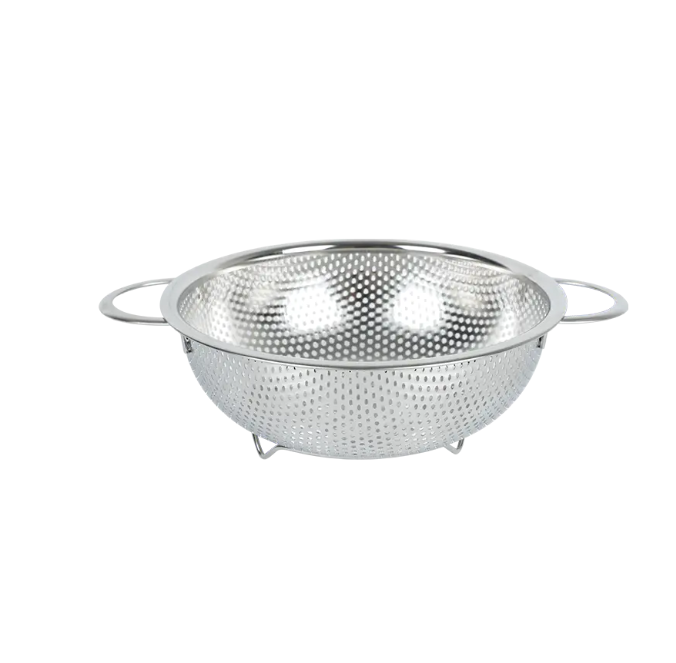
A kitchen pasta strainer is one of those tools. It looks basic. It sits in a drawer or hangs near the sink. Yet it plays a steady role in how food is prepared, drained, and served without unnecessary steps.
Why do home kitchens still rely on pasta strainers?
Cooking pasta or similar foods usually involves boiling and then removing excess water quickly. Without a dedicated tool, this step becomes messy or slow.
A pasta strainer helps separate food from water in a controlled way. It reduces handling steps and keeps the process more direct.
Instead of pouring everything carefully or using makeshift methods, the strainer becomes a fixed point in the workflow.
It is not about complexity. It is about removing small friction from everyday cooking.
What makes a kitchen pasta strainer practical in daily use?
Practicality in kitchen tools is not always about appearance or shape. It often comes down to how naturally the tool fits into repeated actions.
A pasta strainer is used in a simple cycle: cook, drain, serve, clean. When this cycle repeats often, even small inefficiencies become noticeable.
The strainer helps reduce unnecessary movement. It allows hot water to leave quickly while keeping food contained.
Some designs sit inside pots. Others rest over sinks or bowls. The form may change, but the function stays the same.
It quietly supports timing in cooking, especially when multiple dishes are prepared together.
How does a pasta strainer change cooking flow in the kitchen?
In many kitchens, cooking is not a single action. It is a sequence of overlapping tasks.
While one ingredient is boiling, another may be prepared on the side. When timing matters, delays in draining can affect the entire flow.
A pasta strainer helps reduce waiting time. Once food is ready, the transition from pot to serving dish becomes more direct.
This small change affects how smoothly the kitchen operates during busy moments.
Instead of pausing to figure out how to remove hot water safely, the process becomes more predictable.
What types of kitchen pasta strainers are commonly used?
Different kitchens tend to prefer different forms, depending on space and cooking habits. The differences are not dramatic, but they influence daily comfort.
| Type of strainer | Common use style | Practical note |
|---|---|---|
| Bowl-style strainer | Rinsing and draining in sink | Stable placement |
| Handle strainer | Quick draining from pot | Easy lifting |
| Foldable strainer | Small kitchens | Space-saving storage |
| Clip-on strainer | Direct pot use | Minimal transfer steps |
Each type serves the same core purpose, but the handling experience feels slightly different.
In compact kitchens, storage space often decides the choice. In more active cooking environments, speed of use becomes more important.
Why does design matter even for simple kitchen tools?
At first glance, a pasta strainer seems straightforward. Holes, shape, handle. That is usually enough.
But in daily use, small design differences become noticeable.
Grip comfort affects how stable it feels when handling hot food. Hole spacing affects how quickly water drains. Depth affects how much food can be held at once.
Even the edge shape can influence how easily food slides out.
These details do not change the purpose of the tool, but they affect how smooth the cooking experience feels.
Over time, users tend to prefer tools that require less adjustment during use.
How does a pasta strainer improve kitchen safety?
Hot water is one of the most common risks in cooking. When draining pasta or vegetables, steam and splashing can become a concern.
A strainer provides a controlled barrier between hands and boiling liquid.
Instead of tilting a pot directly or improvising with lids, the strainer introduces a more stable transfer method.
It reduces sudden movement and helps keep hot liquid contained.
This does not remove risk entirely, but it lowers the chance of unexpected spills during draining.
In kitchens where multiple tasks happen at once, this stability becomes more noticeable.
What role does cleaning play in everyday usability?
A kitchen tool is only as useful as its cleanup process.
If cleaning takes longer than use, it slowly gets avoided over time.
Pasta strainers are generally designed for quick rinsing. Food particles do not stay trapped easily when the surface is simple and open.
After cooking, water flow can pass through the same structure that was used for draining.
In busy kitchens, this simplicity matters. It reduces the gap between cooking and cleanup.
Some designs also avoid tight corners where residue could collect, which helps maintain consistent use without extra effort.
How does a pasta strainer support multi-dish cooking?
Home cooking often involves more than one dish at a time. Pasta might be cooked alongside vegetables, sauces, or proteins.
Timing becomes a shared factor across all items.
A pasta strainer helps align this timing. When one item finishes boiling, it can be removed quickly without interrupting other steps.
This keeps the cooking rhythm more balanced.
Instead of delaying one dish while managing another, the process becomes more parallel.
In this way, the strainer acts as a small coordination tool inside the kitchen workflow.
Why do small kitchens benefit more from compact strainers?
Space limitations change how tools are used.
In smaller kitchens, every item must justify its storage space. Multi-purpose tools or foldable designs often become more practical.
A compact pasta strainer fits into this pattern. It can be stored easily and used only when needed, without occupying permanent counter space.
It also reduces clutter during cooking. Fewer large tools on the counter means more freedom of movement.
Even simple storage efficiency can influence how often a tool is used.
When something is easy to reach and put away, it naturally becomes part of the routine.
How does material choice affect everyday experience?
Material affects more than appearance. It influences weight, handling feel, and drying speed after washing.
Lighter materials are easier to lift when full. Heavier ones feel more stable during draining.
Smooth surfaces tend to rinse clean more quickly. Textured surfaces may hold water slightly longer but can feel more secure in grip.
In daily cooking, these differences are subtle. They become noticeable only after repeated use.
The preference often depends on how the kitchen is used rather than what the tool is labeled for.
What makes a pasta strainer part of modern cooking habits?
Modern cooking is shaped by speed and simplicity. Many people cook in shorter time windows, often while managing other tasks.
In this environment, tools that reduce unnecessary steps become more valuable.
A pasta strainer does not change recipes. It changes the transition between steps.
That transition is where most small delays and messes happen.
By making that moment more controlled, the tool fits naturally into modern cooking habits without needing attention.
It stays in the background, but it supports the overall rhythm of the kitchen.