

 русский
 Español
The company relies on a high degree of brand awareness, fine product quality, convergence of multiple strong advertising media power, and through the integration of capital, knowledge, talent technology, channels, information operations.
In professional kitchens, tools rarely exist for only one reason. Most of them quietly serve multiple roles at the same time, depending on how the kitchen is organized and how fast the workflow moves. commercial square pizza pans fall into this category.
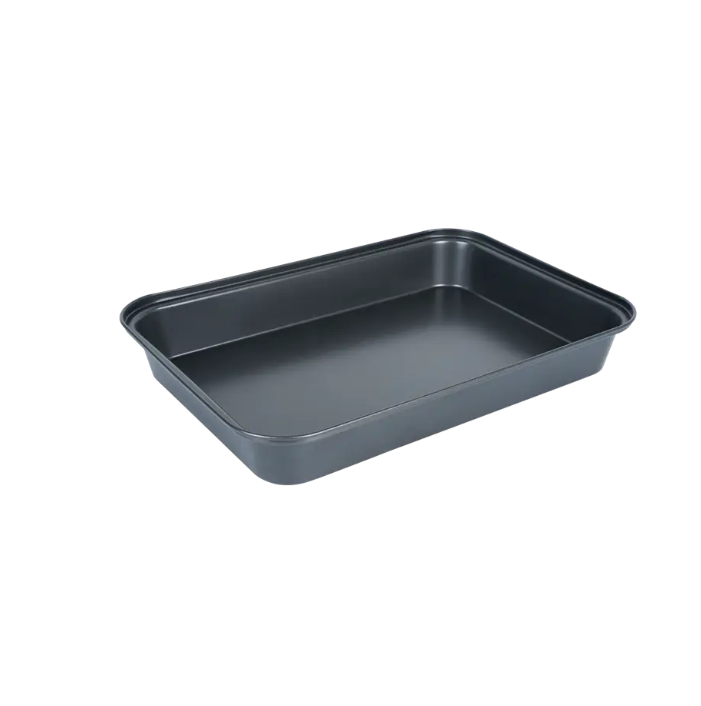
At first glance, they look like a simple baking tray shaped for pizza. But in daily kitchen operation, they often become part of a wider system. Preparation, baking, holding, and even temporary storage can all involve the same piece of equipment.
Their value is not always obvious during selection. It becomes clearer during busy service hours, when space, timing, and repetition start to matter more than anything else.
Why Do Professional Kitchens Prefer Square Pizza Pans In Some Cases?
Kitchen space is always limited, even in well-designed facilities. Oven space in particular is something operators think about constantly. How many trays can fit at once, how they are arranged, and how quickly they can be rotated all affect output.
Square pizza pans help in that kind of environment because they fit more efficiently into rectangular oven layouts. There is less wasted edge space compared to round formats. That difference may seem small, but in repeated production cycles, it adds up.
Another practical point is organization. Square shapes are easier to line up. During peak hours, visual order matters. Staff can quickly see how many trays are in use, which ones are ready, and which ones need attention.
It is not about aesthetics. It is about reducing hesitation during fast movement.
How Do Square Pizza Pans Affect Everyday Kitchen Workflow?
Workflow in a commercial kitchen is not a fixed process. It shifts depending on demand, staff coordination, and timing pressure. Equipment that supports smoother transitions between steps is often preferred.
Square pizza pans help in a few subtle ways. They stack more evenly, which matters during preparation. They also move more predictably between stations, especially when multiple trays are handled at the same time.
In some kitchens, one person is responsible for loading ovens while another manages preparation. In that situation, consistency of shape reduces confusion. A square tray is easier to align visually, especially when working quickly.
There is also the matter of repetition. When the same motion is repeated hundreds of times in a shift, even small improvements in handling reduce fatigue over time.
What Types Of Food Are Commonly Prepared Using Square Pizza Pans?
Even though the name suggests a single use, square pizza pans are not limited to pizza alone. In many kitchens, they are part of general baking operations.
Pizza is still the most common application. The shape supports structured slicing, which helps with portion control and serving speed.
Beyond pizza, they are often used for baked dough-based items that need stable shape during heating. Some kitchens use them for layered food preparations where a flat, consistent base is important.
In practical use, they can also appear in batch baking situations where multiple portions are prepared at once and later divided.
A simple breakdown looks like this:
| Use Case | Why Square Pans Fit Well |
|---|---|
| Pizza production | Easy portion cutting and tray alignment |
| Dough-based baking | Stable structure during heating |
| Batch cooking | Multiple portions in a single tray |
| Structured meals | Clear edges for serving and plating |
The key point is not the recipe itself, but how the shape supports repetition and control.
How Does Pan Shape Influence Baking Behavior?
Shape is not just a visual difference. It influences how heat moves across the surface and how food responds during baking.
In square pans, heat distribution tends to behave slightly differently in corners compared to the center. That variation is subtle, but experienced kitchen staff often recognize it during repeated use.
Some kitchens actually take advantage of this. Edge texture can become part of the final result, depending on the recipe style.
Round pans behave differently. Heat spreads in a more continuous pattern. Square pans introduce more defined zones, which can be useful when certain texture differences are desired.
Neither shape is universally better. They simply create different cooking behavior patterns.
What Role Does Material Play In Commercial Square Pizza Pans ?
Material choice affects daily performance more than appearance does. In a commercial setting, pans are exposed to repeated heating and cooling cycles throughout the day.
Some materials retain heat longer, which influences baking rhythm. Others respond more quickly when moved between temperature changes.
Surface condition also matters. A smoother surface tends to reduce sticking, while slightly textured surfaces may behave differently in heat retention and cleaning cycles.
Over time, material behavior becomes part of routine operation. Staff often adjust timing slightly based on how equipment behaves after repeated use.
Why Does Durability Matter Beyond Lifespan?
Durability is not only about how long a pan can be used before replacement. In professional kitchens, it is more about consistency during its usable life.
A pan that slowly changes shape or surface behavior can affect baking results long before it becomes unusable.
This is why kitchens often monitor performance patterns over time rather than focusing only on initial quality.
Small changes, like slight uneven heating or minor surface wear, may not stop production, but they can influence output consistency.
In busy environments, consistency is often more important than durability alone.
How Does Cleaning And Daily Maintenance Influence Performance?
Cleaning is part of performance, even if it is not always discussed that way.
In real kitchen conditions, food residue can slowly build up on surfaces. When that happens, heat transfer changes slightly. It may not be noticeable immediately, but over time it affects how food behaves during baking.
Square pizza pans are relatively easy to clean compared to more complex equipment, but cleaning habits still matter. Regular maintenance helps keep surface conditions stable.
In some kitchens, cleaning routines are adjusted based on usage intensity rather than fixed schedules. Heavier usage naturally leads to more frequent cleaning cycles.
How Are Square Pizza Pans Used In High-Volume Kitchens?
High-volume kitchens operate differently from small setups. Everything is about timing and repetition. Equipment must support continuous cycles without slowing down workflow.
Square pizza pans fit into that environment because they can be arranged efficiently inside ovens. Multiple trays can be loaded in a structured layout, which reduces confusion during fast operations.
During peak hours, visual clarity becomes important. Staff need to recognize tray positions quickly. Square shapes help maintain that clarity under pressure.
Even small improvements in organization can reduce delays when output demand is high.
How Do Square And Round Pizza Pans Compare In Real Use?
The difference between square and round pans is not just visual. It affects how kitchens organize their workflow.
| Feature | Square Pizza Pans | Round Pizza Pans |
|---|---|---|
| Oven space usage | More structured layout | More open spacing |
| Cutting pattern | Defined portions | Radial slicing |
| Storage behavior | Easier stacking | Less uniform stacking |
| Workflow handling | Clear positioning | More flexible placement |
In practice, kitchens often use both, depending on menu style and production method. The choice is usually based on workflow efficiency rather than strict preference.
Why Do Square Pizza Pans Remain Common In Professional Kitchens?
Their continued use comes from practicality rather than trend. They fit well into systems where repetition, structure, and space management matter.
In real kitchen environments, small efficiencies accumulate. A slightly easier handling process or more organized oven layout can make a noticeable difference during long service periods.
Square pizza pans remain relevant because they support those small but constant improvements in daily operation.