

 русский
 Español
The company relies on a high degree of brand awareness, fine product quality, convergence of multiple strong advertising media power, and through the integration of capital, knowledge, talent technology, channels, information operations.
In kitchens, not every ingredient behaves in a clean or predictable way. Some break down into liquid, some carry tiny solids, and some release textures that are too fine for ordinary strainers to handle.
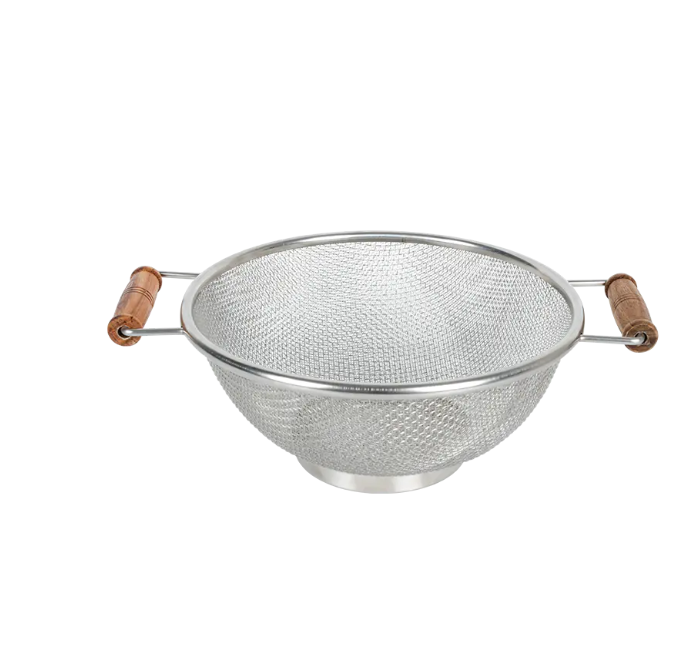
A fine mesh Stainless Steel Mandarin Strainer is used when basic separation is not enough. It works quietly in the background, refining texture rather than changing ingredients. In many kitchens, it becomes one of those tools that is not always noticed, but often relied on.
The question is not only what it does, but what kinds of food actually need that extra level of filtration.
Why do certain foods need finer straining than others?
Food is not always uniform after cooking or processing. Even when something looks smooth at first glance, small particles often remain suspended inside.
Regular strainers usually handle larger solids. Fine mesh strainers go a step further. They catch what is almost invisible—tiny fibers, soft pulp, seed fragments, or residue left after heating or blending.
The need for finer straining usually appears when:
- Texture needs to be smoother than usual
- Appearance must be clean or transparent
- Small particles affect mouthfeel
- A recipe requires separation without loss of liquid
It is less about removing "chunks" and more about refining the final structure.
Which liquids usually require fine mesh straining?
Liquid-based foods are one of the most common categories where fine mesh strainers appear.
Broths and stocks are a typical example. After simmering, ingredients naturally break down. Even after coarse straining, tiny fragments still remain in the liquid. These fragments may not change flavor, but they affect clarity.
A second pass through a fine mesh strainer helps produce a cleaner liquid base.
The same applies to:
- Light soups that require clear presentation
- Vegetable-based broths with fine residue
- Herbal liquids where small plant particles remain
- Fruit-based drinks with suspended pulp
In these cases, the goal is visual clarity and smooth drinking or cooking texture.
Interestingly, the difference is often not obvious during cooking. It becomes noticeable only when the liquid is served.
How do fruit-based foods depend on fine filtration?
Fruits naturally carry fiber, seeds, and pulp. When they are cooked, blended, or juiced, these components often break apart but do not fully disappear.
This is where fine mesh strainers become useful.
For example, fruit purées used in desserts or sauces often need a smoother consistency. Even after blending, small fibers can remain. Passing the mixture through a fine mesh helps remove those remnants.
Common situations include:
- Citrus-based liquids where pulp reduction is needed
- Berry sauces where seeds affect texture
- Smooth fruit purées used in plated desserts
- Fruit fillings for pastries or toppings
The difference is subtle but important. A smoother fruit base usually feels more refined when eaten.
Why are beverages so dependent on fine mesh strainers?
Drinks are especially sensitive to texture. Unlike solid food, beverages are expected to feel smooth and uninterrupted.
Even small particles can change perception.
Cold brew coffee is a good example. During steeping, fine coffee particles pass into the liquid. While filters remove most of them, some remain. A fine mesh strainer helps reduce this remaining sediment.
Tea infusions, flavored syrups, and infused waters also benefit from this step.
In beverage preparation, the goal is usually:
- Clean mouthfeel
- Stable clarity over time
- Reduced sediment at the bottom
- Consistent appearance in serving
A drink that looks smooth often feels more balanced even before the first sip.
How do dairy mixtures use fine strainers in practice?
Dairy-based preparations rely heavily on smooth texture. Even small inconsistencies can affect how a product is perceived.
During heating or mixing, dairy liquids can form small clumps or uneven particles. These are not always noticeable immediately, but they become obvious in final consumption.
Fine mesh strainers help remove these irregularities.
This appears in:
- Custard-like mixtures
- Cream-based sauces
- Yogurt processing steps
- Milk-based dessert fillings
In many cases, straining is not about changing flavor, but about improving uniformity.
The smoother the mixture, the more stable the final texture feels.
What role do fine strainers play in sauces and reductions?
Sauces often go through long cooking processes. Ingredients soften, break apart, and blend into the liquid base. But not everything dissolves completely.
Small herb pieces, spice fragments, or cooked solids may remain.
In some dishes, this texture is acceptable or even desired. In others, a smoother finish is preferred.
Fine mesh strainers help separate liquid from residue without altering the sauce itself.
They are commonly used in:
- Pan sauces with reduced liquids
- Glazed finishes for plating
- Smooth gravies
- Refined cooking reductions
The result is a cleaner texture that spreads more evenly on food.
How are infused foods affected by fine mesh filtering?
Infusion is a slow process where flavors are extracted from ingredients like herbs, spices, or fruit.
Once the infusion is complete, the solids are no longer needed, but the flavor-rich liquid remains.
A fine mesh strainer allows this separation without losing the infused base.
This is important in:
- Herbal teas
- Spiced broths
- Infused oils
- Flavor-enhanced syrups
Without fine filtration, leftover particles may continue to release flavor or change texture over time.
Why do desserts often require an extra straining step?
Desserts are sensitive to texture in a different way. Even small imperfections can stand out in something meant to be smooth and delicate.
During cooking, ingredients like eggs, sugar, and dairy can sometimes form small lumps or uneven textures.
Straining helps correct this before the mixture sets.
This is especially common in:
- Custards and puddings
- Cream fillings
- Fruit-based dessert layers
- Smooth dessert sauces
The goal is not complexity, but consistency. A smoother base usually leads to a more stable final dessert structure.
How does particle size affect food perception?
Even when flavor is unchanged, texture can influence how food is experienced.
Small particles may create a rough or uneven sensation. In liquids, they may settle at the bottom or float unpredictably. In sauces, they can affect flow and coating.
Fine mesh strainers help control this by reducing particle size presence in the final product.
This creates a more uniform eating or drinking experience, even if the recipe itself remains unchanged.
A simple overview of food types and why they need fine mesh strainers
| Food Type | Common Issue | Result After Straining |
|---|---|---|
| Broths & soups | Tiny cooking residue | Clearer liquid base |
| Fruit mixtures | Seeds, pulp, fibers | Smooth consistency |
| Beverages | Sediment or fine particles | Clean drinking texture |
| Dairy products | Small clumps | Uniform smoothness |
| Sauces | Herb or spice residue | Refined finish |
| Infusions | Remaining solids after steeping | Clean flavor liquid |
Why this tool appears in so many different kitchens?
A fine mesh strainer is not limited to one type of cooking. It appears in home kitchens, bakeries, restaurants, and beverage preparation setups.
Its usefulness comes from flexibility. It does not transform food, but it adjusts how food is experienced.
In many ways, it acts as a final refinement step—quiet, simple, and often unnoticed until it is missing.
Different foods behave differently once they are processed. Some naturally become smooth, while others leave behind textures that need adjustment.
Fine mesh strainers sit in that space between raw preparation and finished presentation. They help bridge the gap between what food is and how it is experienced.
Whether it is a drink, a sauce, or a dessert base, the purpose is often the same: create a cleaner, more controlled final texture without changing the essence of the ingredients.